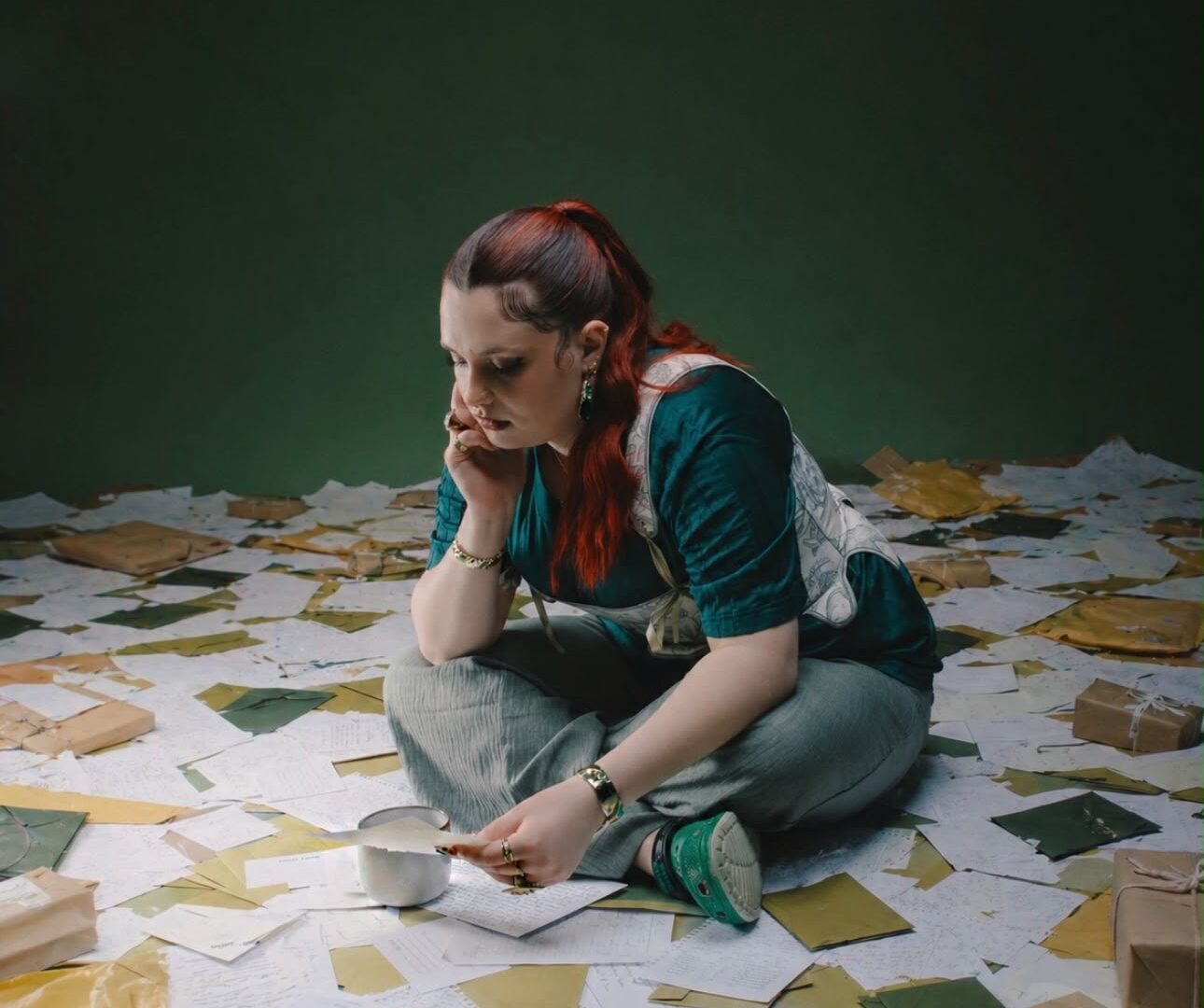
From Italian opera and post-hardcore to neo-soul and rap, Croydon storyteller Dia Day talks wearing her heart on her sleeve, finding her voice and turning diary entries into debut album, Letters to L…

Letters to L is a well-educated record. I can just about hear the 10,000 hours of musical devotion Dia has paid to her vocation, and her music is all the better for it.
From inheriting her “geezer” Dad’s taste in tunes to rinsing post-hardcore bangers in her teens, Dia is well-versed in well-researched music, with a spell in her ancestral Poland spent studying jazz and blues, and a flirtation with musical theatre and Italian opera that has since influenced her range and technique. “I care much more about honesty than I do about fitting into a genre”, she shares, a reflection that speaks to her time at the BRIT School, where she switched up a focus on indie rock to a more acoustic singer-songwriter identity, that went on to evolve into neo-soul. “I think I was trying to prove myself to the other singers there, that I was a proper vocalist”. Dia Day is, undoubtedly, a proper proper vocalist with an award-winning voice that’s appeared on arena stages alongside her Flames Collective peers, supporting the likes of RAYE and Skye Newman, but she’s also an accomplished lyricist, bravely deciding to take a risk and do her music degree as a rapper rather than a singer.
“I felt like if I could just get my rapping up to the same standard as my singing, I’d be able to fully tell the stories I wanted to tell.”
Dia Day
“A lot of my music is me shifting the weight from my heart onto paper”, shares Dia, an ode to her diary-esque song-writing and heartfelt vocal delivery. There’s a vulnerability there, but also an unwavering strength, and I was struck by a keen sense of earnest emotion and honesty in the way she shared her own musical journey with me. It never fails to amaze me how much of an impact organisations like UD Music and Flames Collective have on artists like Dia Day.
The support, guidance, and practical resolve that they offer are second to none, and provide an invaluable resource and community that has led emerging artists to even higher heights.
“Some of my favourite Dia Day songs have been born in sessions at UD… It’s helped me not only with making music, but with connecting and understanding the professional world around it too.”
Dia Day
And what a world it is. Expansive, far-reaching, and resplendent with the talent of every musical persuasion.
For anyone just discovering Dia Day, how would you introduce yourself and the music you make?
I used to say that I make neo-soul and storytelling rap with jazz influences, but I feel like that doesn’t quite capture the essence of my music.
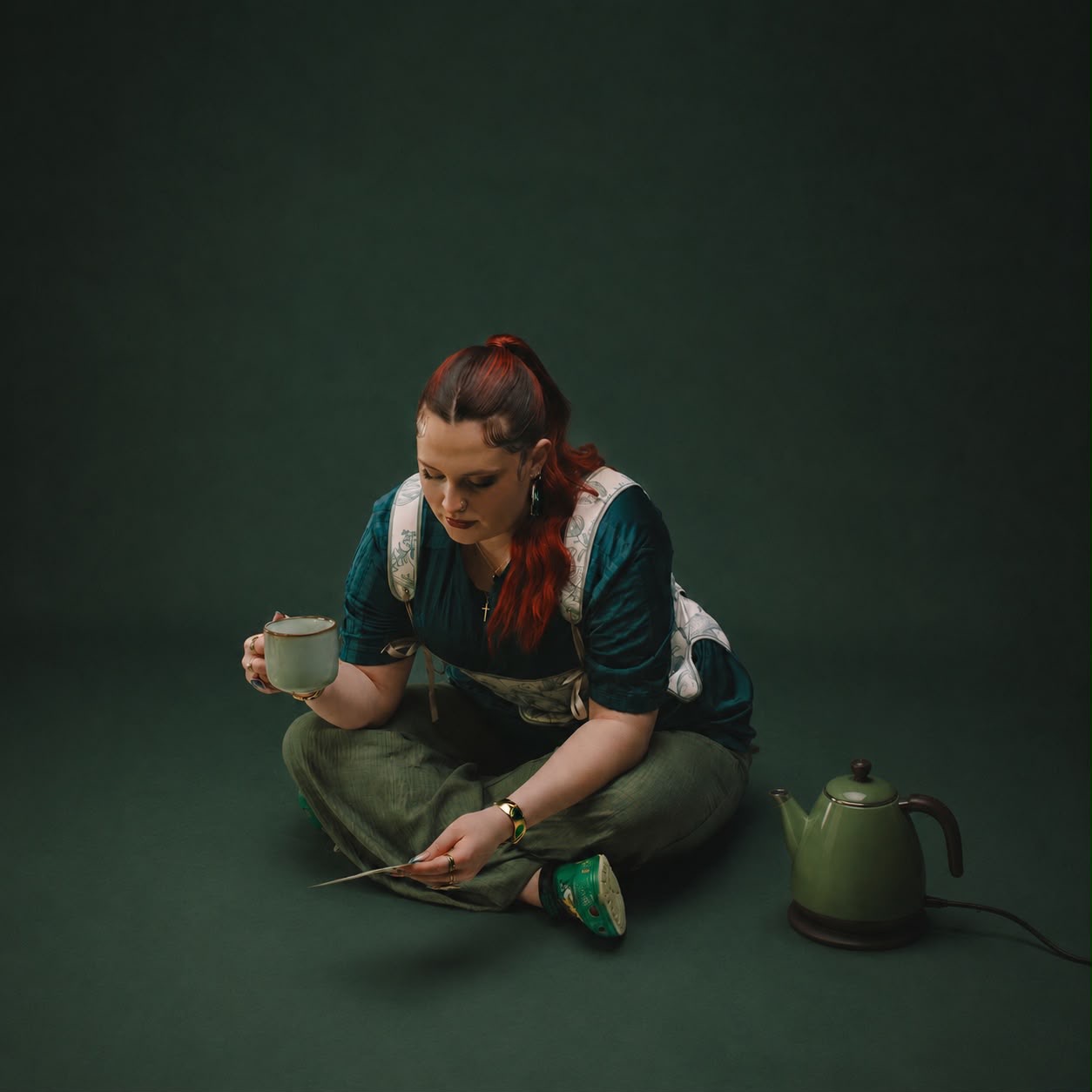
I started saying I make “music for tea drinkers and overthinkers” and recently added “for Croc wearers and oversharers” to the description too.
My writing is very diary-esque. I write to process my life. It’s how I make sense of the world around me.
My music is less of a sound and more of a sentiment, that sentiment being transparency. I want my music to feel like you’re reading my diary entries or listening to personal conversations, because that’s exactly what my songs are. I’ve always cared more about telling stories and musically doing whatever I need to, to best set the scene, paint the picture and serve the narrative. I care much more about honesty than I do about fitting into a genre.
I’ve said in the past, especially in regards to my album, that a lot of my music is me shifting the weight from my heart onto paper. When I write I’m really just trying to consolidate and streamline all the thoughts flying around my mind so I can understand my feelings better, and also communicate them to others. Songwriting has always been a way in which I can say things I might struggle to put into words otherwise. As an artist, I’m not interested in coming off cool or sexy or even desirable. I’d rather make something honest that someone can listen to and think, “Oh, thank God, it’s not just me.”
As vulnerable as a lot of my music is though, I still try to infuse it with as much of my personality as possible, because as much as I’m a deep person, I’m also deeply unserious. I don’t want everything to feel heavy just because it’s heartfelt.
If you like thoughtful lyricism, good storytelling and live instrumentation then you’ll probably find something you resonate with in my music.

You’ve said you make music for “tea drinkers and over-thinkers; Croc wearers and over-sharers”. Who do you picture when you’re making music, and where do you see yourself in that description?
This might be a slightly controversial answer, but I don’t picture anyone when I’m making music, at least not as far as an audience. I don’t make music with an audience in mind. Most of the time I’m just trying to document my life, and then hoping it resonates with other people too.
If I am picturing anyone while I’m writing, it’s probably the person I’m writing the song about, or if it’s a song about the past then I’m picturing myself in the situation I’m writing about.
When it comes to music, I make it for myself, but I share it in the hopes that it might resonate with someone who feels things as deeply as I do.
As for where I see myself in that description, I’m definitely all four. I go through so much herbal tea every day that it’s basically become a personality trait. I’m a massive overthinker, I read too much into things and I’m deeply insecure (aren’t we all). As for the Crocs, I genuinely don’t wear any other shoes. I have more than 30 pairs. It started as a comfort thing and a bit of a neurodivergent obsession, but now it’s definitely become a pillar of my branding because I consistently wear crocs in the most inappropriate situations, like red carpets or funerals.
And as for oversharing, I literally make music that documents my life, and I think that could be classed as oversharing.
You’re from Croydon, with Polish heritage, and there are threads of rap, neo-soul, jazz and grime running through your music. What were the sounds around you growing up, and how have they found their way into what you make now?
Growing up there were some Polish influences from my mum and grandparents, but more so UK music (from the ’50s onwards) from my Dad, who’s a proper geezer. I think my dad’s music taste might have shaped mine a lot growing up, because I actually listened to a lot of alternative music and indie rock.
At the same time I was really into jazz and blues, and went to Poland to study it. l also studied Italian opera for years when I was at school and I think that really influenced the way I use my voice now, like my range and technique.
I was also listening to post-hardcore in my early teens when I started writing my own music so it probably influenced me a lot and birthed some very existential (crisis) lyrics. I definitely wanted to be like Hayley Williams from Paramore when I first started out.
When I was at the BRIT School though, I switched from indie rock to more acoustic singer-songwriter vibes, and then somehow that evolved into me writing neo-soul. I think I was trying to prove myself to the other singers there, that I was a proper vocalist. I couldn’t riff or run when I first started the BRIT School and I became obsessed with working on my voice. I’m so glad that happened because I fell in love with artists like YEBBA and Erykah Badu who inspired so much of how I choose to use my voice now.
Living in South London, I absorbed a lot of rap influences too, especially when I started working with other artists and singing hooks for rappers when I was around 16 or 17. I became absolutely obsessed with grime at that point. I was kinda late to the party, but I felt like I’d found a whole new world to explore.
That was around the time I started really going to church too so of course gospel became a big musical influence. I was also in care as a teenager and my foster family are Jamaican/Mauritian, so there were a lot of other musical influences flying around too. I began absorbing a lot of Black British and Caribbean musical influences at a really pivotal time in my creative development and these genres became some of my strongest musical influences – especially reggae, garage, dancehall and bashment. These, blended with the neo soul and rap, started forming the sonic palette I use now.
You appear to be as comfortable singing as you are rapping. How important is it to you not to be boxed in as one kind of artist?
I was actually a singer first. I only started rapping around lockdown. I was singing for years, studying opera, musical theatre, jazz and blues, before rapping ever became part of my world. I didn’t rap at all for the first five years or so that I was writing music. I would write slam poetry though, so spoken word was always part of my life in that way. I didn’t think I was cool enough to be a rapper, or that it was necessarily a genre I could partake in without appropriating something that wasn’t mine. I only decided to try rapping after being surrounded by rappers and them encouraging me to write bars, but when I did I found that I could tell certain stories way better than I could through other genres, because it’s a more narrative driven genre.
Then I ended up doing a music degree and I decided to take a risk and do my degree as a rapper rather than a singer. I felt like if I could just get my rapping up to the same standard as my singing, I’d be able to fully tell the stories I wanted to tell.
It’s funny because people probably recognise me more as a rapper now, but I was actually a singer first, and a songwriter first and foremost before either. I just think rap draws a bit more attention because I’m a woman, whereas there are so many singers no one bats an eyelid.
For years though, even while I was rapping, I refused to call myself a rapper. It took a lot for me to accept it as part of my artist identity. I felt like I had to reach a certain standard before I could claim it. I wanted to approach it with respect for the culture it comes from and really put the work in to do it justice as an art form.
What cracks me up though is that even though I’m recognised more as a rapper a lot of the time, singing is literally my day job, outside of being an artist. I work as a backing vocalist, so it’s funny that people know me more for the things which I do a lot less.
You’ve described Letters to L as songs you wrote because you “didn’t know what else to do with your heart”. Where did the album begin for you?
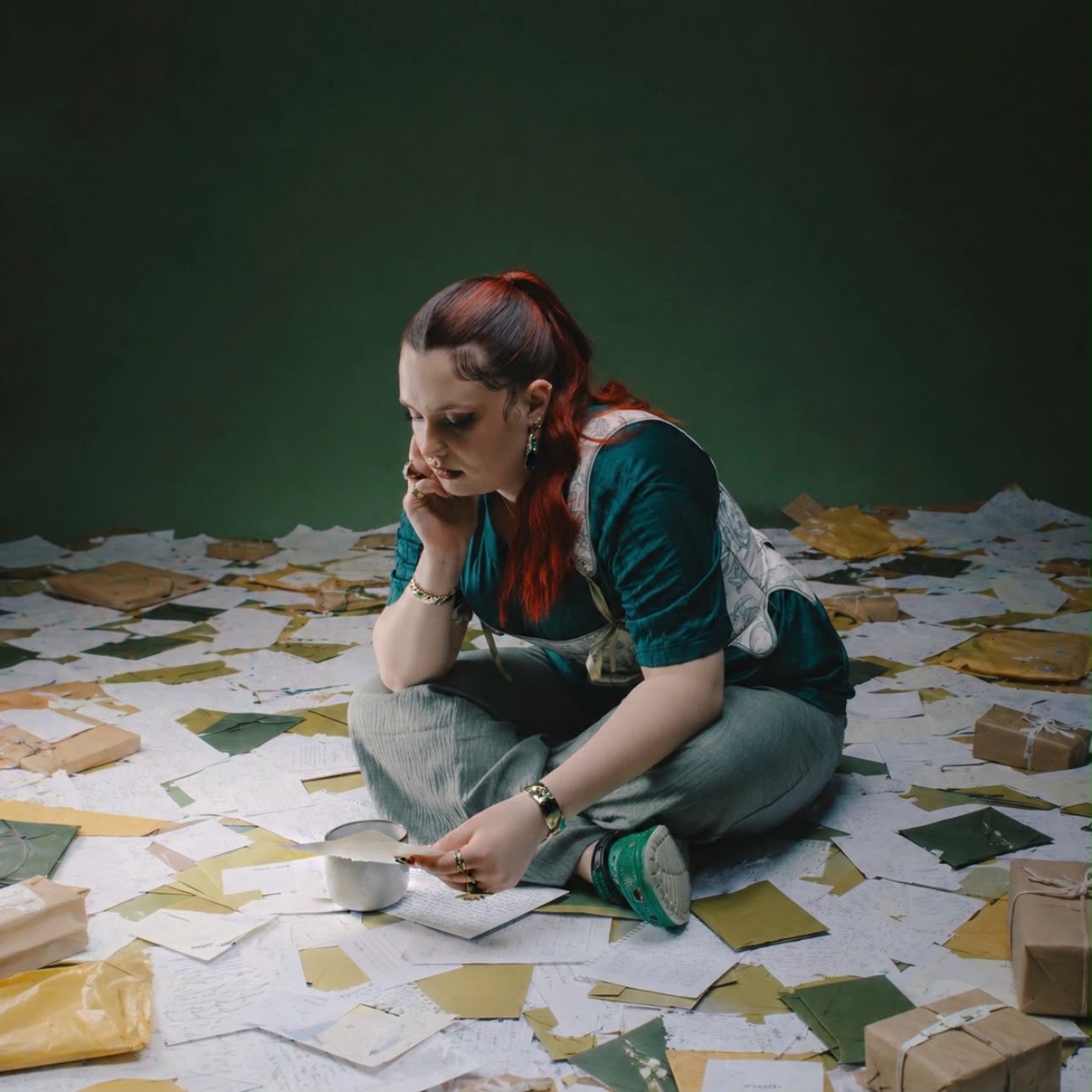
It really began as an emotional release rather than an album. I was writing my way through a relationship and all the different versions of myself that existed inside it.
I didn’t write these songs thinking, “I’m making my debut album.” I was just trying to process what was happening to me. Writing has always been the way I make sense of things that feel too big or complicated in my head.
Eventually I realised these songs belonged together because they were telling a story. I actually wrote a lot of them in periods of no contact with the man I was writing about. A lot of my best music, especially the music I’ve written about relationships, has been written during periods when I’m not actually in them. Times I can’t express what I want to say to someone, so I find another way to get it out. The songs were letters in a way, things I needed to say. So I called it Letters to L.
It’s probably the most honest introduction to me I could have made because I wasn’t trying to create a conceptual project or anything, I was living through a complicated relationship and trying to understand what was going on.
There’s a lot of vulnerability and storytelling across the record. How does it feel now that something that started from such a personal place is finished, released and belongs to other people too?
It’s weird. It was something that I lived with for so long and that existed only in my head for a while, and then only between myself and the producer of the project, Patris.
There was a period of time, a couple years, where I actually thought the project would never come out due to label issues. So when the rights suddenly reverted to me on a random day after trying to get out for so long, it didn’t feel real. I couldn’t believe I was free to share it. I had come to terms with my fate, that this was just a personal crash out wrapped in a musical ribbon which might never see the light of day, and then suddenly it was allowed to.
I had a listening party on the day it was released and it was such a strange feeling, watching other people listen to it. It was like watching a hundred people read my diary at the same time.
When the songs were mine, they were attached to specific situations, feelings and moments. Once I released them I lost control of that. Someone can hear a song about one of the most specific moments of my life and attach it to something completely different. A memory or feelings that belongs to them.
I think that’s beautiful though. Letters to L started as me trying to understand my own feelings, but if someone can take one of those songs and use it to understand something in themselves, then the vulnerability was worth it.
There’s also something freeing about the album finally being out. It feels like closure, both musically and personally. I can finally look at it as a complete body of work, rather than a wound that is being held open indefinitely.
‘Green Tea’ with Shogun Shato won you a Youth Music Award last year. What was it about that collaboration that clicked, and did the response to the track shift anything for you?
Shogun and I clicked because he is, above all things, a storyteller, so as far as I’m concerned we are very much cut from the same cloth. In terms of how we approach music, our priority is the same – storytelling. Another thing we share is how deep we’re willing to delve into our own pain, insecurities and flaws for the sake of art. The way he writes is pure honesty and vulnerability of the highest degree, and since I first met him half a decade ago, the way he writes has continued to move me.
‘Green Tea‘ lives in the world I love most; conversational, intimate, soulful and very specific. The collaboration added another voice and perspective to the project, something I couldn’t do by myself, without taking away from how personal the story is.
Winning ‘Original Track of the Year’ at the YMAs was a huge moment for us. You spend so much time as an independent artist making things because you believe in them without knowing whether anybody else is going to understand what you’re trying to do. Having that song recognised felt like confirmation that I’m on the right track.
I don’t think it made me want to suddenly change direction, if anything, it did the opposite. It affirmed that I’m seen as an artist, rather than just a good singer. It gave assurance that I don’t have to make my music more commercially viable or less personal for it to connect with people.
You’ve performed at the O2, Wembley, the BRITs and the MTV EMAs as part of Flames Collective, alongside artists like RAYE and Skye Newman. What have you learnt from being on those stages that feeds into Dia Day as a live artist?
Performing with Flames has taught me things I don’t think I could have learnt any other way. It’s allowed me to see behind the scenes of award shows, music festivals and TV, understand how those parts of the industry work, and learn to adjust quickly when things change. It’s made me adaptable, sharpened my memory and strengthened my voice through hours of singing and rehearsals. It’s also absolutely killed off my stage fright. We’ve performed in front of hundreds of thousands of people, and doing it again and again has taught me composure and inner peace, whether I’m in an arena or playing a show in someone’s basement.
It’s also made me love music even more, in a really pure way. You have to really humble yourself to consistently serve somebody else’s vision when you want to be an artist yourself, but somehow the deep love for music and the wonder of what’s being created overrides that natural selfish ambition to shine, and backing someone else becomes deeply fulfilling.
I’ve been able to see what goes into performances at a huge scale and watch incredible artists operate up close. I’ve also picked up so much from the artists we’ve worked with. Performing alongside RAYE taught me that being really technical doesn’t have to come at the expense of emotion. The best performances can feel very human and spontaneous while actually having an enormous amount of preparation behind them. From Skye Newman, it’s her boldness and the way she doesn’t dilute or dial down her personality. I learnt that you can be incredibly fun and lighthearted and simultaneously work with professionalism and excellence, and that these things aren’t mutually exclusive.
All of that feeds into Dia Day. I want my live shows to feel intimate regardless of the size of the room.
Where has UD Music come into your journey so far? Has being part of that community changed the way you approach your music, your live performance or the industry around it?
UD has been a really important part of my journey over the last few years, particularly through performing with Flames Collective. It’s given me access to performance opportunities I wouldn’t have ever thought of dreaming up, and to a community of musicians and creatives who have become a huge part of my life.
Being with Flames taught me so much about what it means to contribute to something bigger than yourself. You learn very quickly that being a great performer isn’t just about what you personally do on stage, it’s about understanding your role within the whole picture.
Outside of Flames, I’ve done songwriting days at UD, both for Flames and for myself, and worked with amazing producers and artists who have become part of my wider network. UD has given me access to recording and rehearsal facilities. Some of my favourite Dia Day songs have been born in sessions at UD. I also took part in the Incubator Programme, which allowed me to develop other sides of my artistry while building relationships across the industry.
As well as other singers and artists, through UD, I’ve connected with music lawyers, managers, those working at DSPs and other parts of the industry. It’s helped me not only with making music, but with connecting and understanding the professional world around it too.
And finally: Crocs. You’ve gone as far as writing them an open letter, so where did the love affair begin, and are they making it onto stage with you?
I’m not sure exactly where the Crocs obsession began, but there are actually a lot of reasons I wear them. I had surgery on both of my legs, was in a wheelchair and had to learn to walk again, so footwear has always been uncomfortable for me. I have scars on both of my inner ankles, and I’ve dealt with a lot of pain, so standing for long periods of time can be difficult, which is tricky because performing means standing a lot for a living.
I’m neurodivergent and have sensory issues too, so I dress for comfort. I think I used to find other footwear overstimulating, I just didn’t realise why I was so agitated. Then I bought my first pair of Crocs and realised how much easier they were for me to wear. Any time I’d try to wear anything else after that I’d just be super aware of the shoes on my feet and yearning for my crocs.
Now I have over 30 pairs, so we’ve moved beyond casual appreciation and into a committed relationship. They’re comfortable, they have personality and I love how unserious it is to wear them in serious situations. They’ve definitely become part of the Dia Day uniform.
They’re attached to some really significant memories too. I wore my green Celtics Crocs when I won my Youth Music Award, I was given some bright pink crocs backstage at the MTV EMAs and even had backing-vocal gigs, including the Graham Norton Show with Ed Sheeran where wardrobe politely suggested an alternative.
So yes, they’re absolutely coming on stage with me. Partly because I don’t own non-crocs, and partly because at this point, people would probably be more surprised (and disappointed) if I arrived in anything else. Crocs actually responded to my open letter and sent me some really cool stuff so the collection is newly restocked! The dream is still a Dia Day x Crocs partnership though, I’ve been doing unofficial brand ambassador work for long enough!
Follow Dia’s journey on Instagram HERE.
Words: Elsa Monteith