From securing lucrative brand partnerships to making bank from your merch sales, Kenny Barber (Relationship Manager, Black Music at PRS) and an expert panel dig deep into how we can make good money from making good music. Elsa Monteith reports…

Making money in music is no mean feat, but it’s an industry that generated a total revenue of 28.6 billion U.S. dollars in 2023, with global streaming revenues reaching 19.3 billion U.S. dollars in the very same year. Overall, recorded music revenue increased by 10 percent last year, a hopeful nod towards a steady growth in financial backbone across the music industry, and an indication of the tacit and sometimes untapped wealth that exists in these spaces.

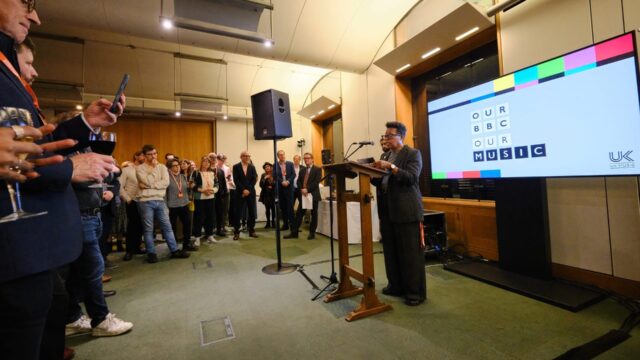
The meeting of minds generates something narrowly more powerful than taking home bank, and that’s the clarity of cold, hard knowledge. Kenny Barber hosted this honest and revealing panel on the Thursday of UD’s Industry Takeover 2024, expertly extracting vital insights into the industry that we aren’t always privy to. From artists and composers to brand partnership and relationship managers, the panel was made up of six of music’s best practitioners, each with their own unique takes on how to diversify your income streams.
Host, Kenny Barber, is the Relationship Manager for Black Music within PRS for Music, a vital organisation at the helm of royalty collection, licensing, and the redistribution of funds for artists. Kenny introduces us to Jamal Green, a British composer who has been selected as a BAFTA breakthrough, and has a whole catalogue of impressive names that he’s collaborated with.

To his left is Vaniece Jno-Baptiste, a highly accomplished and experienced entertainment marketing and brand partnership manager at Puma who is no doubt behind your favourite artists’ latest brand campaign.

Moving one along we have Richard Carter, a visionary artist who’s journey has led him to produce the song ‘Le Monde‘, a globally chart-topping track which not only found itself centre-stage at the Paris Olympics, but also brought to life the biggest horror film of 2023, Talk To Me.


As we move along the panel, we get to Jords, an artist who’s been on a meteoric rise to fame since he landed on the scene, with the unique achievement of having the first UK rap album to be released on the legendary Motown records. And last, but by no means least, we come to Nippa, a vibrant artist who has featured on the R&B legend Craig David’s latest album “22” and been championed by the BBC as one of their Hot 4 2023.

Talking about money so candidly isn’t something you always see on stage, and Kenny facilitated a nuanced and practical conversation about how to gain financial freedom from making music, capturing the different approaches and perspectives that each of our panel offered. We’ve condensed the talk into three core focuses covering everything from brand partnerships and managing an advance, to media syncing and how to get the best out of your merch sales. There’s a lot to take in, but for now – enough talk – let’s make some dough.


Brand partnerships:
What are brands looking for when they want to sign an artist into a partnership deal?
- Having a message is key. Brands are looking for people that have more to say than just chatting about their music, they want to see that you actually want to impart messages to the world.
- Showing that you have an interest in the brand is important, but that doesn’t necessarily mean literally having the brand placed performatively all across your socials.
- You need to fit in line with what the brand has coming out. The brand itself has their own calendar, their own products that are launching, and their own story that they want to tell. Be prepared to wait until the time is right.
- Relationship development is vital. Checking in with your representative can stretch the work further, stay in touch with your contacts.


“Brand partnerships can create a cascade of all different types of revenue streams if done correctly.” Kenny Barber

Where is the money in brand partnerships? What’s the process like?
- Once you sign, you might have a six month term, one year, two year, five year term depending on whether you’re a grassroots artist or a superstar.
- The brand will lay out the deliverables in the contract, and you negotiate with what that looks like and what you also want to deliver.
- Often, the brand will work with you to identify your passion points or things you want to explore more. This could be the gym, or even a new EP coming out. They’ll discuss these things during your contract to add on any additional revenue for you during that time.
- The key thing brands are looking for is people who are passionate and authentic.
“I think people send emails, swap out names, copy and paste, and then expect the next conversation to be a brand deal. It takes time to build and get to where you need to be, and not just from your perspective, but from the brand too.” Vaniece Jno-Baptiste

Music commissions, syncing, and protecting your rights
What is the difference between commissioned music and a sync?
- A producer, director, game developer, or whoever will approach an artist to work on their projects, and usually the revenue stream there is a commission, so an upfront fee, and like anything, you can negotiate that.
- Sometimes there are back end fees too for a commission, but usually it’s an up front fee for all the work and most of the time including your expenses, so hiring musicians, mixing music, just so you have those deliverables ready at the end.
- For a sync, the music has already been created and found by those wanting to use it, so they’ll approach the artist and ask to sync it in a piece of media, sometimes TV, film, or a game.
- It’s important to be wary of your rights here – organisations like the Musicians Union can help provide affordable legal advice when it comes to looking over contracts and confirming your terms of use.

“People will come to you and throw you a contract and be nice and tell you that they’ll get their lawyer to talk it through with you, but it’s their lawyer. Get a third party involved like the Musician’s Union to make sure you know your rights.” Richard Carter
Managing an advance and more traditional revenue streams
How do you manage a lump sum or more structured advance payout?
- Deals vary in terms of how they’re structured, with some paying biannually or in one lump sum. Be clever with your money and plan month to month.
- Some artists choose to use the advance to make an investment, with Jords investing in two music studios following his first advance in 2019, which has grown into five studios in five years.

“I’m not at my deal anymore, but that investment in studios still provides me with cash flow every month, and off the back of that I invested in a couple of other ventures. The music thing isn’t forever, I don’t want to tour until I’m 70 years old, I would like to be able to retire and have things coming in that can generate an income so I don’t have to worry.” Jords

Is touring worth doing if the revenue stream isn’t particularly profitable?
- A lot of the fee goes towards putting on a good show, so find other ways to generate income.
- Register and submit your set lists to PRS for every show. This will help you!
- Have different setups for different budgets. For X amount of budget, you might get the artist and a DJ, for a bigger X amount of budget, you might get the artist, a DJ and a saxophonist, for an even bigger X amount of budget, you might get a full band. Work out your structures and don’t put yourself out of pocket.
“I perform with a live band, so most of my show fee goes on making a performance great because that will open the door to more performances and a bigger fee in future.” Jords

Should I invest in merch?
- Bring merch to your shows because that’s an income stream you can own, but keep an eye on your contract terms because some venues or labels will seek to take a percentage of your sales.
- It can cost a lot to invest in creating merch, but one thing that you can do to offset the first cost is to do pre-orders. If you get 100 pre-orders for a T-shirt, then you can use that profit to press more T-shirts than what you were originally going to print to make even more profit. It’s not impossible to do merch without any budget.
- Think about selling a T-shirt for £25 – how long is it going to take you to earn that from streaming? Merch can be very lucrative if done correctly.

“Remember that you’re also a vessel for so many other people to earn money. When you’ve got a team of people around you, their salaries are attached to you just living your art – it’s very powerful. I want to encourage everyone here that if you’re struggling in your industry, keep working hard, because you’ll be surprised how many people are watching and listening. You never know.” Kenny Barber
Words: Elsa Monteith. A Brighton based writer and broadcaster working in and around the arts and on the radio waves. Subscribe to Elsa’s Discontented newsletter here.
Photography: Laura ‘Hyperfrank’ Brosnan & Anthony Wilde