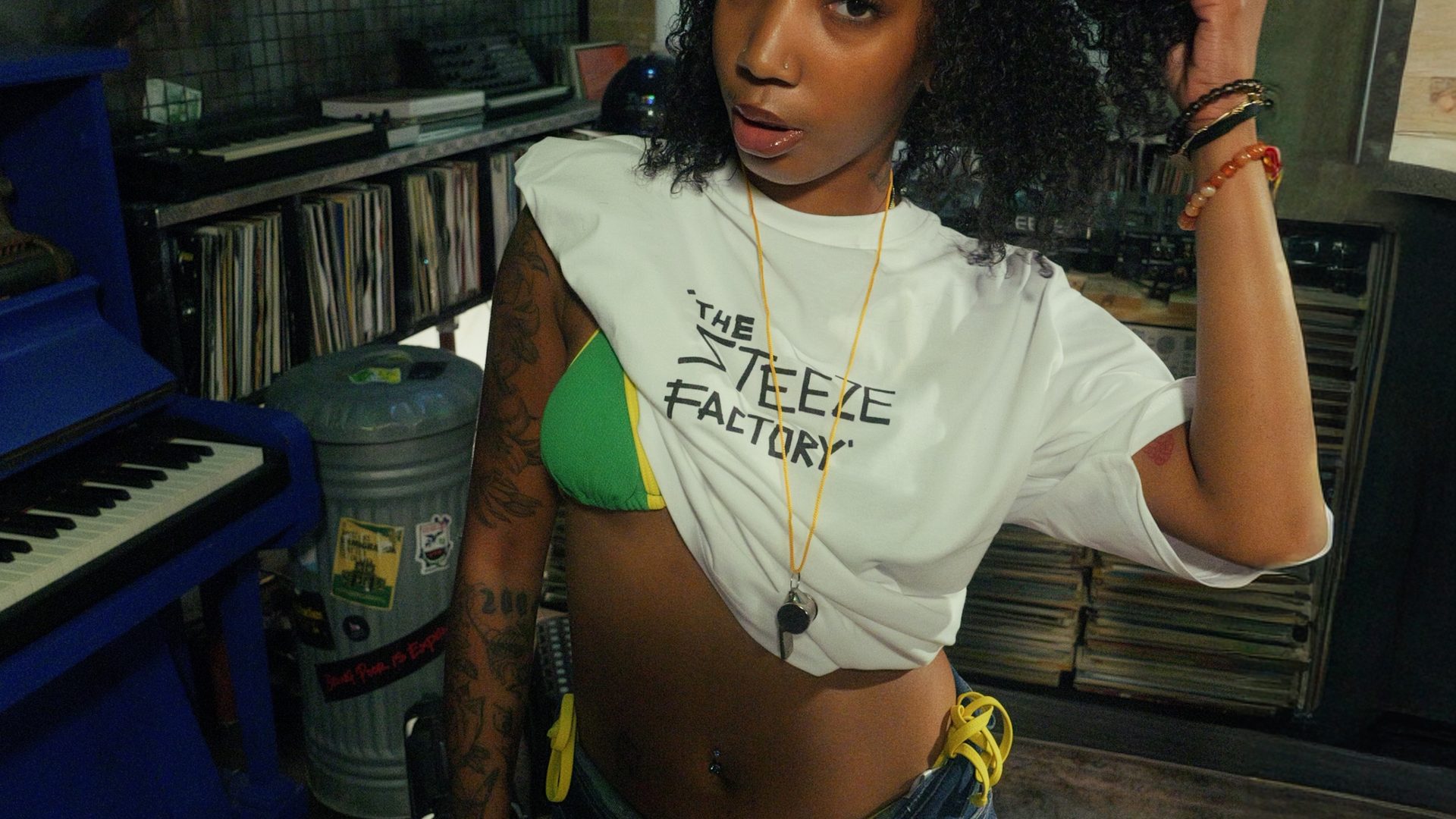
With new single Focus on the way, Shelbee talks with UD about Croydon’s community spirit, Sunday mornings soundtracked by her DJ dad, singing alongside RAYE with Flames Collective, and the Incubator lessons that have her parents signing up for an artist management course…
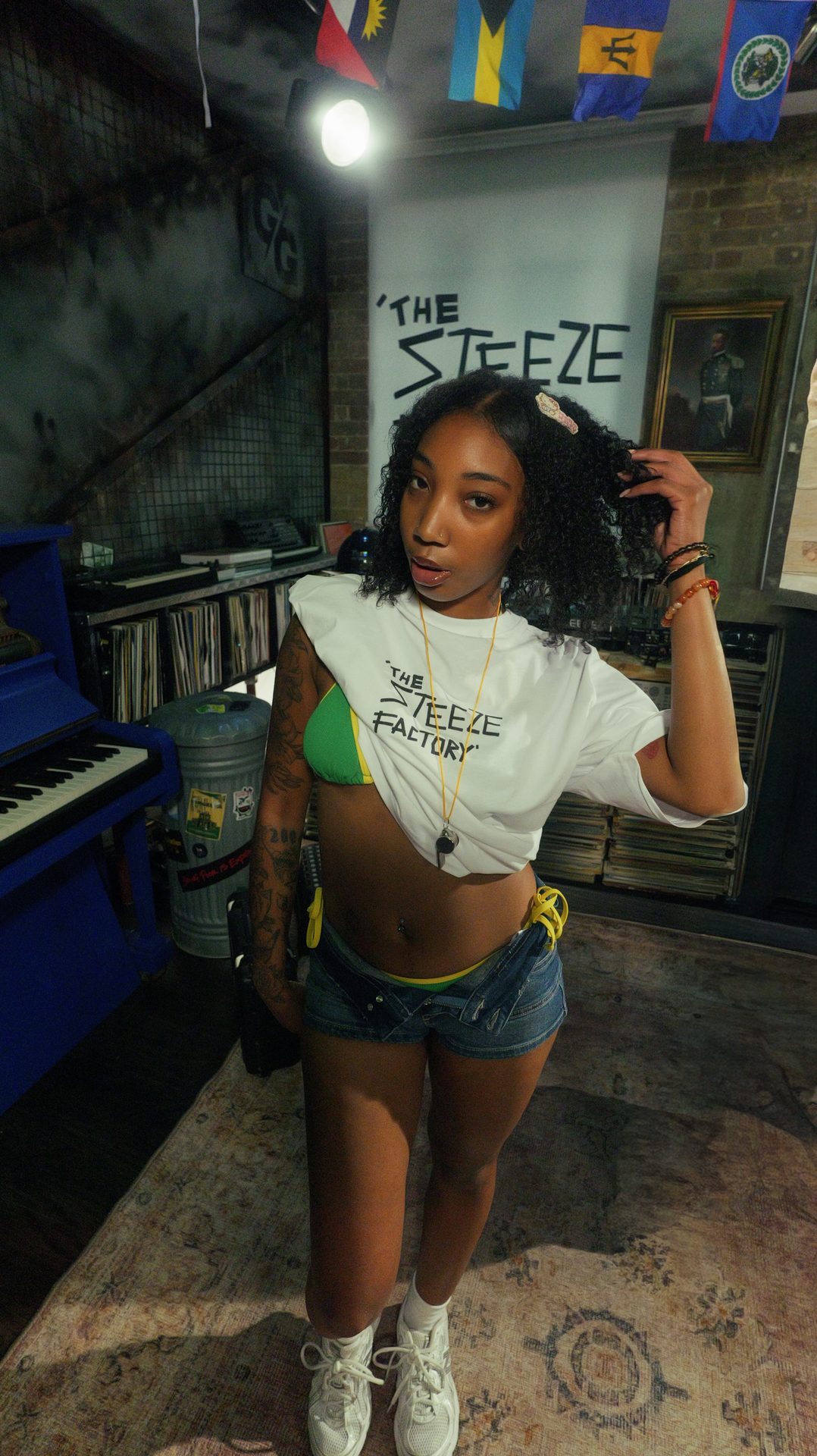
Thornton Heath-raised and just 20 years young, Shelbee Tee doesn’t so much stretch the boundaries of R&B as ignore them. She names Jaz Karis, Ella Mai and RAYE as British touchstones, but her real thrill is the deep end. “I feel like I can sing on any beat,” she says. Right now that means a project with grime crew Ruff Sqwad, who asked her to jump on as one of their artists. “I’m not going to rap on anything, I’m gonna sing on it. I like the challenge and I’m open to trying new things.”
Music runs in the family – her dad is a reggae and dancehall DJ, one grandad sang, the other plays bass – and Shelbee has been singing “literally since I could talk.” What stands out most in our conversation, though, is her knack for turning hard moments into something useful. Her debut single, It Only Gets Better, was written after she lost two grandparents in the space of two months. The call inviting her onto the UD Incubator programme came on the day of her auntie’s funeral. “A negative and sad day, but with that news I felt blessed for real.”
That outlook – flip the negative, keep moving fwd – runs through everything she says, from Croydon’s reputation to dealing with haters. It’s also the message at the heart of Focus, the song she’s now reworking, with a video to match.
Your sound is R&B at its core, but you’ve sung over everything from Afroswing to dancehall. How would you describe it to someone hearing you for the first time?
I’d say I’m versatile, but I’ve got my own kind of R&B sound going on. I’ve even got dancehall R&B tunes – the beat is dancehall, and the R&B is in the way I’m singing on it. I’m genuinely open to finding the pockets in different genres, even rock. That would be sick to try! I love a challenge. If I do a traditional R&B song it would be great, but I feel like there’s more that can be done. If I slap myself in the deep end straight away, it’s like, ‘oh, this is different, but I like it!’
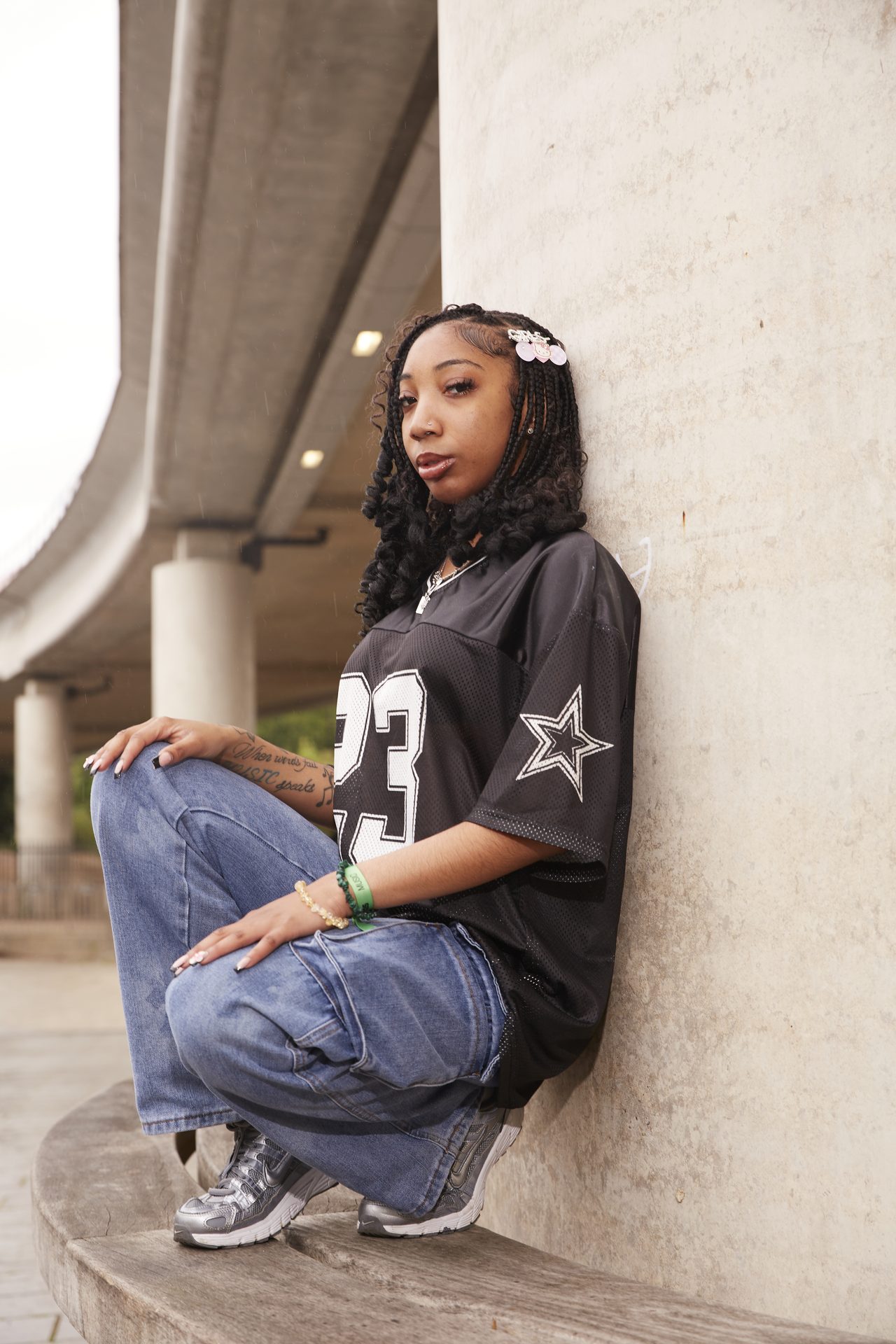
Your first single, It Only Gets Better, came out of a really difficult time. Tell us about it.
When I wrote it, my life was… I can’t lie, it was a bit dark. I lost two of my grandparents in the space of about two months. I thought, ‘let me make that negative into a positive’, and I ended up making a banging track. It’s Afroswing-leaning. Usually Afroswing feels like a party, that lively energy, but this one still has that nice swing with a deeper meaning. Looking back, it’s a song I needed to hear myself. The key message I wanted to leave people with is in the title – it only gets better.
Do you feel there needs to be more of that kind of substance in music right now?
For sure. I’ll be real, a lot of people cap in their lyrics. A lot of people don’t do music for the love – they just do it because everyone else is jumping on it, or they think it’s gonna make them money. You can always tell the ones doing it for the love and the ones in it for the bread. I’m talking from real-life experiences. There are things I’ll address that I know other people have gone through too.
You grew up in Thornton Heath. How has Croydon shaped you?
Croydon’s got a stereotype, especially for girls. The perception is if you’re from Croydon, you’re ghetto, you’re this and that. Not even! A lot of talented people come from Croydon – Stormzy, Krept & Konan. It’s a lot down to the tests and barriers we face, but there’s a real community spirit too. Despite the issues, people band together, and people looking in from the outside don’t see that.
We’ve got a youth club called Legacy in West Croydon with a studio, gym, basketball court, cooking lessons – it’s £5 for the year’s membership and a pound every time you go. I used to go when I was about 14 and I’ve started going back. There aren’t a lot of youth clubs anymore. Back in the day there were hella youth clubs, and now they’re just gone. That’s why some of these boys are on the road – they’ve got nowhere to go.
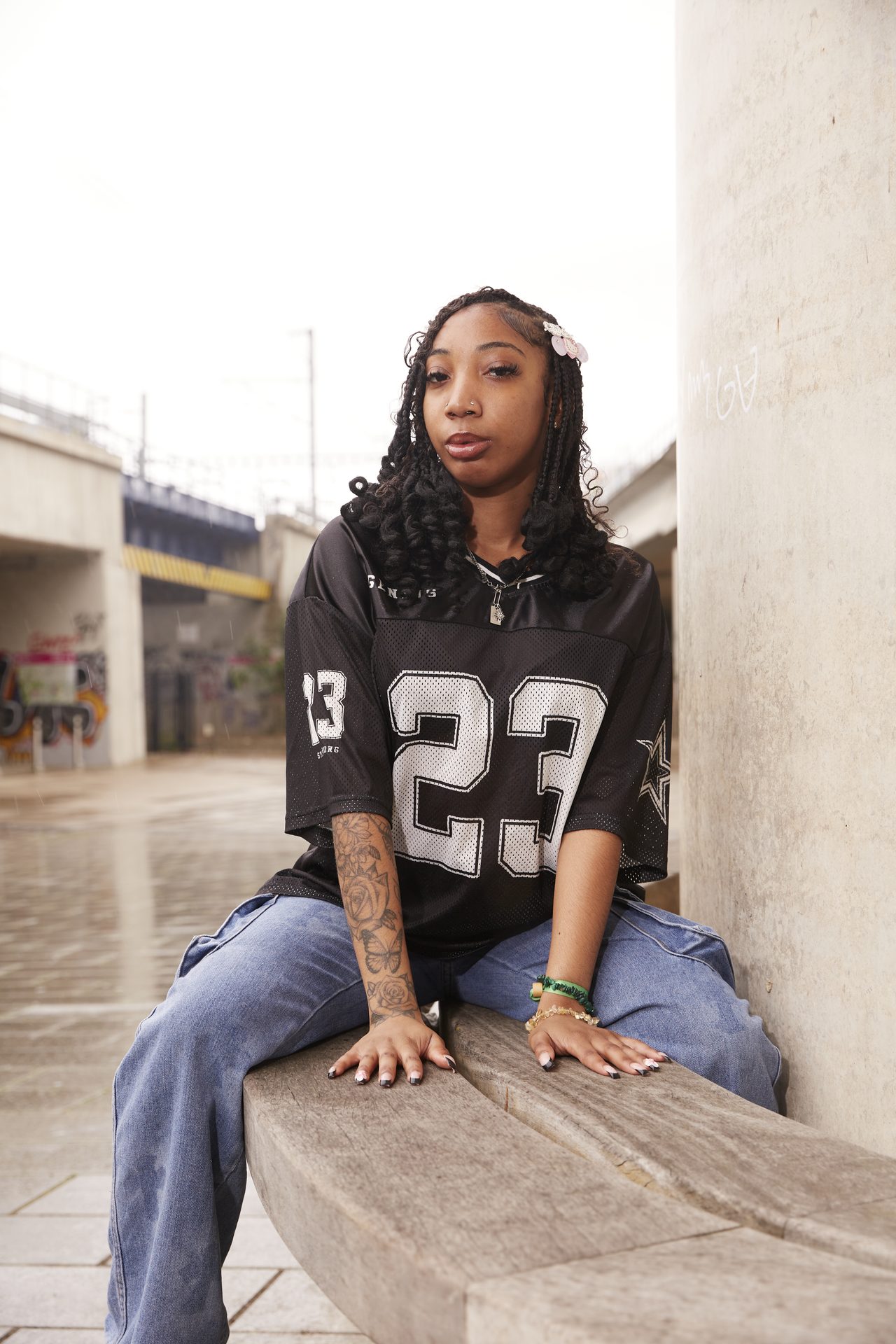
Your dad’s a DJ. What did your house sound like growing up?
My dad’s a reggae and dancehall DJ – that’s his main thing – so I was hearing bare dancehall, bashment and reggae. That’s a standard Sunday morning. But when he does other parties he dips into UK funky, house and UK garage, so I grew up on a lot of that too. I’ve explored funky a little in my own music and I definitely want to dip in more. Donae’o, Princess Nyah, Crazy Cousinz, Kyla – they’re the originals. I was so gassed when I met Malika when she came into UD to work with us on songwriting. We need to bring that era back.
Do you remember the first time you saw your dad play to a big crowd?
Endz Festival at Lloyd Park – funnily enough, my brother helped create that event. Seeing my dad up on that stage, I was so gassed for him. He was going in for about an hour, taking us on a journey through so many genres, and giving the crowd what they wanted too – mixing in bangers from people like Cardi B, which he doesn’t normally play. DJing is my dad’s dream, and now he’s my DJ as well. Seeing him follow his dreams makes me see that anything’s possible. It’s mostly about consistency. It might take a while at the start, but you can get there.
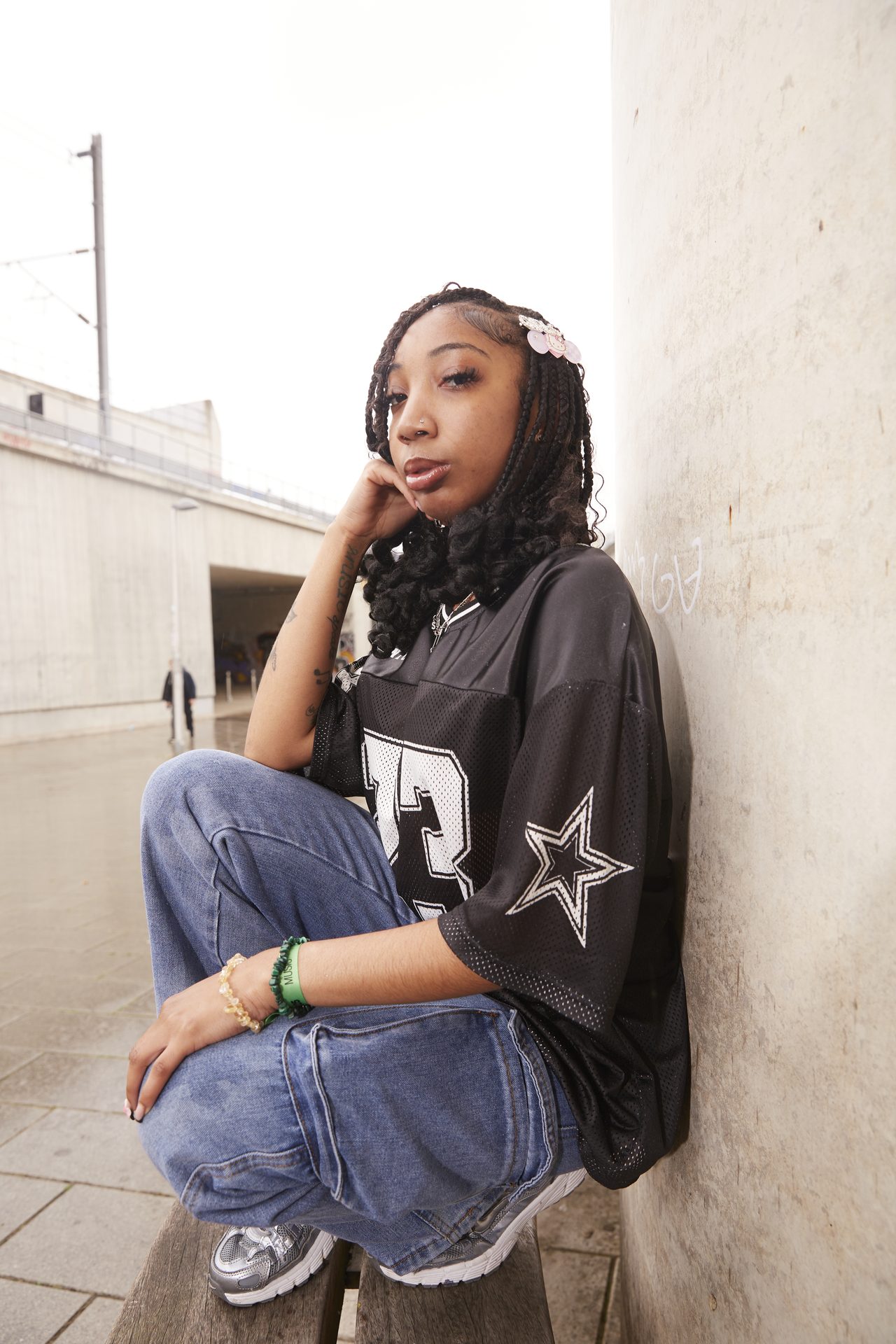
Who else has inspired the lane you’re in now?
RAYE, definitely. And Miraa May – she’s cold! I like how she adapts to different sounds and still sounds like herself. I saw her live session with Ruff Sqwad and The Compozers doing Together for GRM, and the way she was singing on grime… Then I saw her at SXSW London singing over amapiano, R&B, pop and dance vibes, and it opened my eyes to what’s possible. Jhené Aiko too. She’s got her own brand, she knows what she’s about, and you can tell she’s writing from experience. It emotionally connects with her audience, and that’s what I want to do.
Dance is a big part of your story too.
I’ve been dancing since I was three, up until 18 – that’s the cutoff at my dance school. Aaliyah is one of the GOATs to this day. When you add dancing into a performance it takes it to a different level. Look at Beyoncé, Michael Jackson, Prince, Chris Brown – them man are on a different level. I want to bring dance into my stage show, get a few backing dancers up there. It changes the whole vibe and makes it more memorable. Step by step, that’s the plan.
Talk us through your writing and recording process.
It changes depending on the situation. Sometimes I’m in my room with a beat off YouTube and I’ll lock in and write. But I make the best music when a producer’s there and we just get straight to it. They cook something up, I write when I first hear it, and they can shape the beat around my vocals.
I’ve been working with Dino, who’s also been involved with UD, and a few others – we’ve got a group chat called Upcoming Talent with producers, photographers, videographers and artists. Now I’ve got a studio set up in my yard, so mandem just pull up and we lock in till the early hours. No one’s asking for money – people just want their rightful split and royalties, which I respect. That’s something I learnt more about on the Incubator.
How has performing more changed the way you approach a set?
I like to be prepared for different audiences. At an R&B event I’ll do my R&B so they’ve got me, then add something different to show I’m versatile. At a rap event – rapping’s not my speciality – I’ll sing, but bring a rapper’s flow into it. I’ve done pub gigs where I’m catering to an older crowd, so I’ll do covers like Al Green’s Simply Beautiful or Amy Winehouse. They don’t know me yet, so showing my ability with something they like makes them more open to taking me in.
Even if there’s hardly anyone in the crowd, I’m grateful to be on that stage. It’s all learning and progress. And you don’t know who’s watching – what if one of the ten people in the room is an agent, manager or A&R?
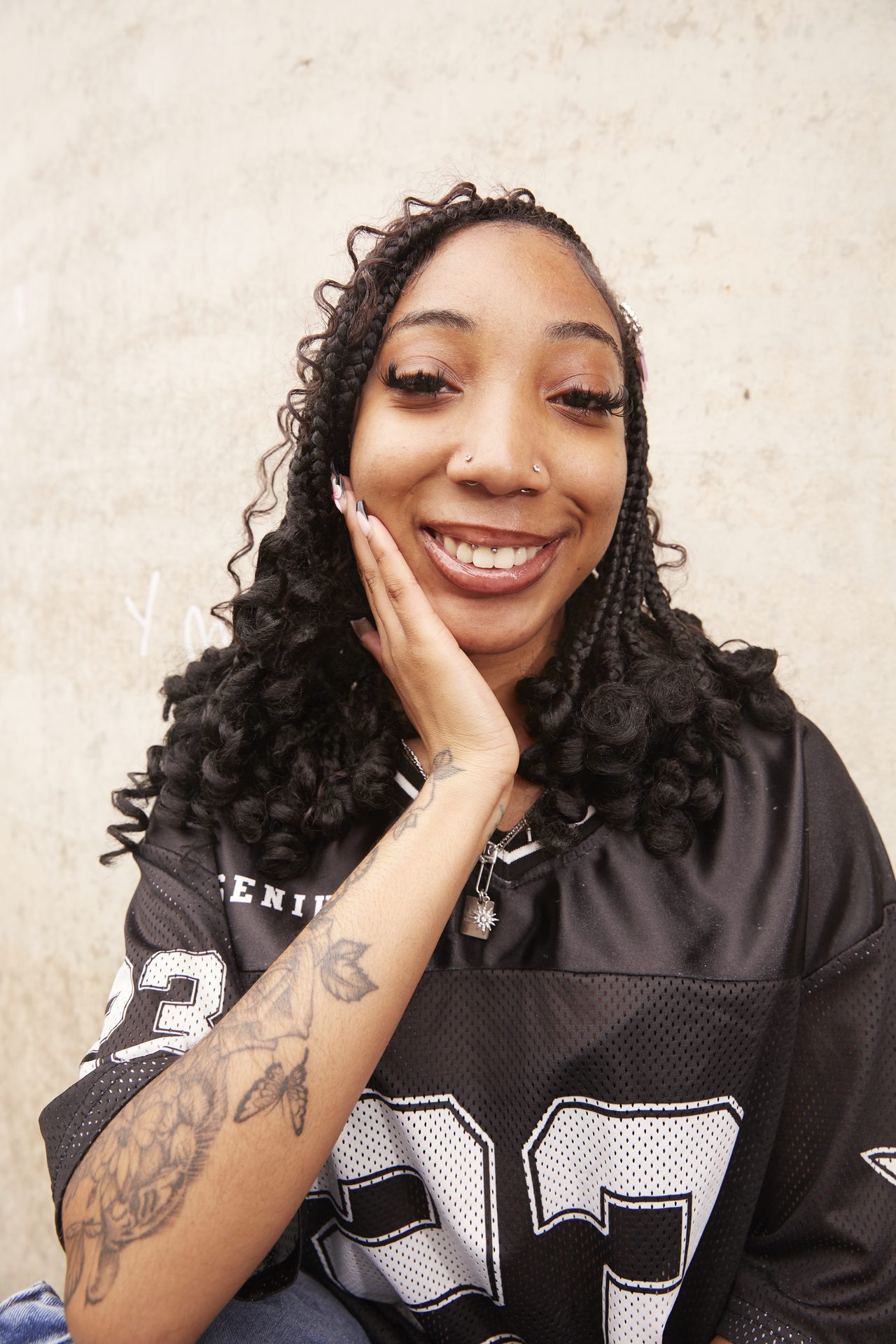
What’s been your favourite show so far?
Solo, it would be Taps On Tracks – they hold it all over London, at places like Boxpark Shoreditch. In April 2024 they did an all-female line-up at a pub in Brixton and I was headlining. A load of my bredrins came down and knew my tunes, so I was even more gassed.
With Flames, it has to be the RAYE shows. The first time I performed with her was the O2 Arena, then the Royal Albert Hall. Just being on those stages made me think, ‘I can be RAYE one day.’ She’s from the ends, and it showed me up close that you can really go from the bottom to here. Everything she’s been through has shaped her into who she is now, and when I see her win, I look at myself the same way. It’s all a test. Everything’s a blessing in disguise.
How did you find your way to Flames Collective?
I’d always known I wanted to do music, but I really started doing my thing when I had to leave my first college. I left because I was gonna get kicked out, but I changed that bad situation into something positive. I even got my first tattoo: ‘When words fail, music speaks’. At my next college, SoundSkool in Old Street, they sent us a link about a choir looking for singers. The first thing I did with UD was a songwriting programme, and the following week I got a call asking if I’d audition for Flames. Hell yeah!
I’m never usually nervous singing, but I was in a room with bare singers and my heart was beating. Then I found out I got in, and from there it was one big gig after another.
“If I hadn’t changed direction, I wouldn’t have found Flames Collective, and I wouldn’t be doing the Incubator either.”
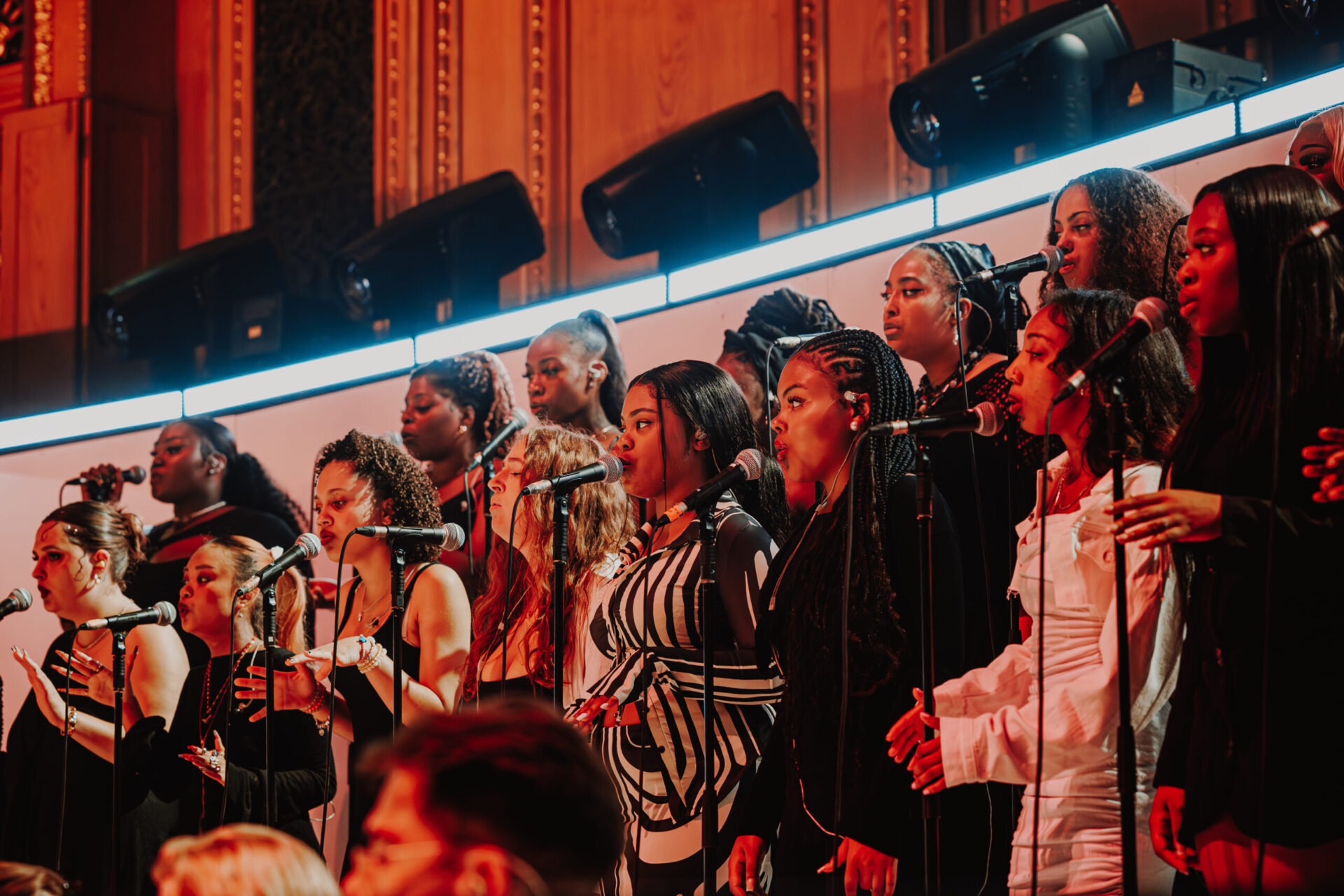
What has Flames taught you?
It’s really developed my voice. I’ve been in it over two or three years now, and at the start there were notes I wasn’t hitting that I’m hitting now. I started in the mid section, then Andy Gilbert (MD) moved me to soprano, and that’s trained my voice to another level. After the first Royal Albert Hall show with RAYE, Andy said, ‘you’re actually a really good performer’. A lot of people don’t understand – even though you’re in the background in a choir, you’ve still gotta go in like you’re the main person on stage.
And the Incubator?
UD called me about it on one of the peak-est days of my life – my auntie’s funeral. They didn’t know where I was. Again, a negative and sad day, but with that news I felt blessed.
I’ve done a lot of music programmes, and a lot of them were telling me the same thing I already knew. The Incubator was delivered to a whole different standard. You’ve got singers, rappers, managers, PRs, producers, songwriters, journalists and people who explain social media, grants, splits and royalties, all coming in to speak to you. There was a speed-networking session where you sat one-to-one with industry people. I met a lady from PPL who explained how to join and register your music so you get your bread, and a lawyer who’s worked with artists like Sasha Keable and J Hus. When you get to a certain level, you need a lawyer, because people are going to try to bump you. I took his email quick!
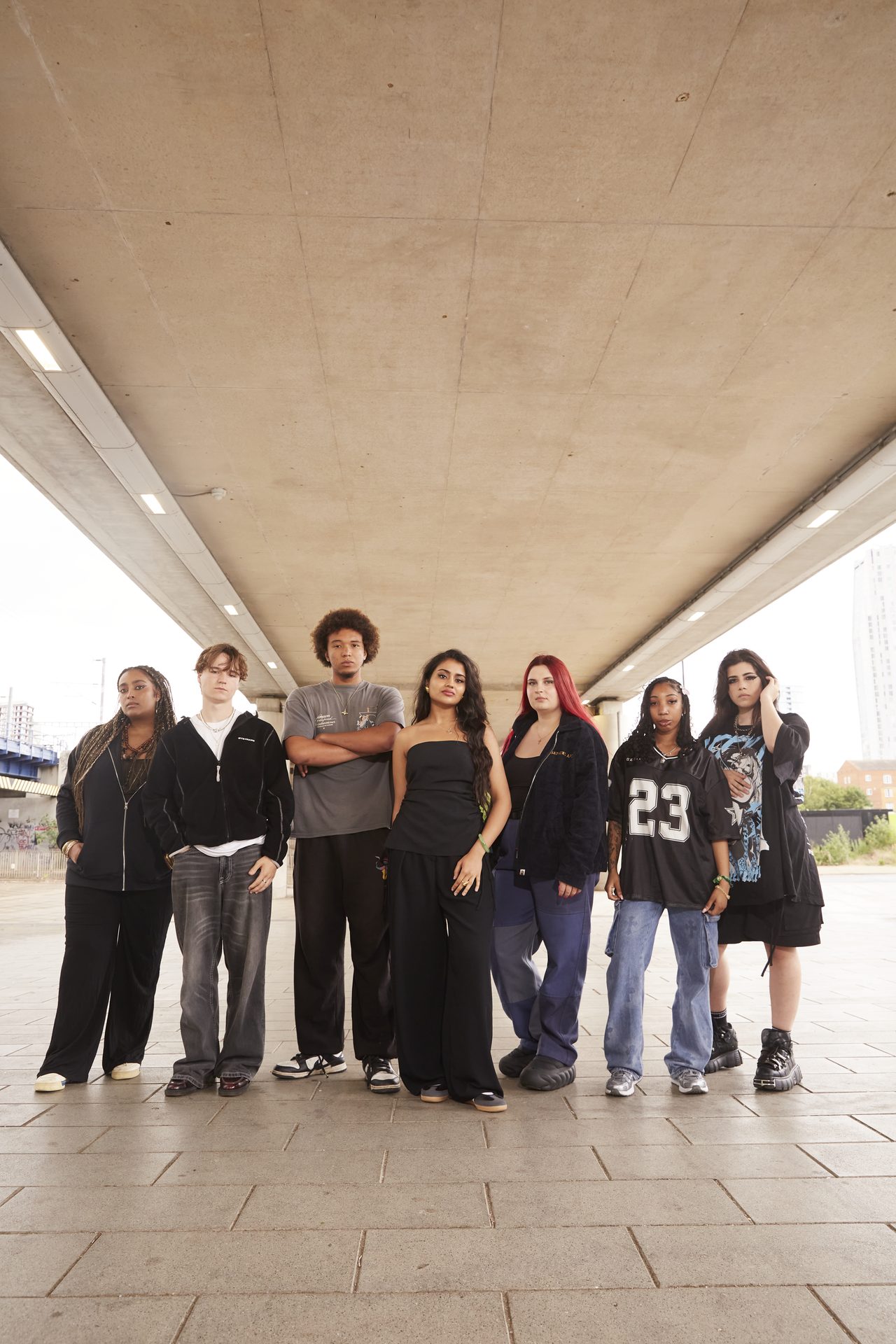
The music publishing sessions were sick too – from the Incubator alone I’ve networked with three different people in publishing. My mum and dad are my managers, and I’ve told them they need to jump on an artist management course! We learn together.
You’re also giving back through Ruff Sqwad Foundation. Tell us more.
Ruff Sqwad Foundation have put me on to so much – free studio time, learning what it means to be an engineer, connecting us with Balamii radio. Now I’m working with the young people on their Grime Pays programme, emerging artists like RB. I’m getting paid to help young people with music. I love that.
What are you working on right now?
I’m reworking a song I wrote about two years ago called Focus. I was going through all these mad tings, but the message is to just keep doing your thing. When I perform it, I tell people, ‘if you’re going through a hard time, just focus, let the rhythm run’. I’m making a video for it – just me doing my ting, maybe even clips from my phone of me performing.
I also did a Ditto course and made a music video that premiered at Rich Mix cinema. After the premiere we went downstairs and I performed some of my own tunes as well.
Where do you want to be this time next year?
I’ve started dropping songs over the last year, so hopefully I’m working towards my own headline show. I want to drop an EP too, but it depends on how the singles go. I’ve got a strategy now!
And longer term – what mark do you want to leave?
I want people to connect to me. I want to be at the O2 doing tours, all of that. But no matter what the money or the fame looks like, I’m staying myself. A lot of people change up when they get the bread and the fans. I know who I’ll be. Good, positive energy, a cheeky bit of bants, that South London thing – I talk like this, I’m just me.
“I want people to catch a vibe when they listen to my music, and not just one age or background. I’d love to jump on an old-school Motown vibe one day – not just for me, but for my community too.”
As things grow, you’ve spoken about seeing some hate come your way. How do you deal with that?
It gives me motivation. I don’t do nothing to upset people, so if I see someone hating I think, ‘you clearly rate my thing’. I take it as a pat on the back. Everyone should be trying to bring each other up. If anyone else is going through it, I just say keep doing your thing. Focus. It’s all part of the journey, and I’m so thankful and blessed to be here doing what I love.
Follow Shelbee’s journey on Instagram HERE.
Interview: Laura ‘Hyperfrank’ Brosnan